How 3D Piping Design Technology Elevates Precision and Efficiency
- Mar 23
- 3 min read
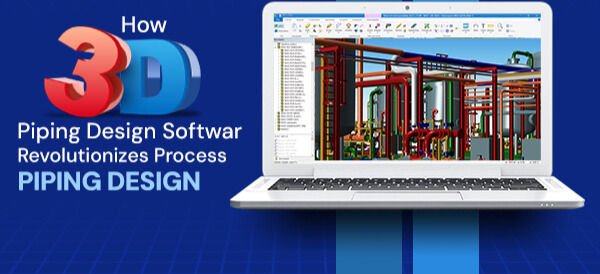
In modern industrial engineering, precision and efficiency are no longer optional—they are critical for success. How 3D Piping Design Software Revolutionises Process Piping Design is transforming the way engineers approach complex projects, making design, collaboration, and execution faster and more accurate than ever. By leveraging advanced 3D technology, piping professionals can streamline workflows, reduce errors, and enhance overall productivity.
This blog explores the key ways 3D piping design technology elevates precision and efficiency in plant and industrial projects.
Enhanced Accuracy and Visualization
One of the most significant advantages of 3D piping design technology is its ability to provide highly accurate and detailed models. Traditional 2D drawings often leave room for misinterpretation, while 3D software enables precise representation of piping layouts.
Key benefits:
Clear visualization of complex piping systems.
Reduced design errors and miscalculations.
Accurate spatial alignment of pipes, valves, and equipment.
By seeing a realistic model of the plant layout, engineers and stakeholders can identify potential conflicts early and make informed decisions before construction begins.
Streamlined Design Process
3D piping design software dramatically speeds up the engineering process by automating routine tasks and improving design workflows.
How it improves efficiency:
Automated routing and component placement.
Pre-built libraries for pipes, fittings, and valves.
Quick revisions and updates without redoing the entire design.
Software like CADWorx Plant Professional or Intergraph Smart 3D helps teams complete projects faster while maintaining high accuracy and consistency.
Clash Detection and Risk Reduction
Clashes between pipes, structural elements, and equipment are costly issues that can cause delays and overruns. 3D piping design software includes built-in clash detection tools that minimize such risks.
Benefits of clash detection:
Identifies conflicts before construction begins.
Reduces costly rework and downtime.
Improves overall project quality and safety.
Early detection ensures smoother project execution and boosts confidence among engineering teams.
Improved Collaboration Across Teams
Modern industrial projects involve multiple disciplines and stakeholders. 3D piping technology fosters collaboration by providing a centralized platform for sharing and reviewing designs.
Collaboration advantages:
Real-time updates for all team members.
Easy sharing of models across mechanical, civil, and electrical teams.
Enhanced communication and reduced misunderstandings.
This collaborative approach ensures everyone stays on the same page, reducing delays caused by miscommunication.
Data-Driven Smart Design
3D piping software isn’t just about geometry—it’s a data-rich platform. Designers can integrate material specifications, flow rates, and operational parameters directly into the model.
Smart features include:
Material and component data management.
Integration with process simulation results.
Automated generation of bills of materials and isometric drawings.
Data-driven design reduces errors, ensures consistency, and supports downstream engineering tasks, from procurement to construction.
Cost and Time Efficiency
Using 3D piping design technology can lead to significant cost and time savings for industrial projects.
Cost-saving factors:
Reduced material wastage.
Fewer on-site modifications.
Lower labor costs through automation.
Time-saving factors:
Faster design iterations.
Streamlined review and approval processes.
Efficient project planning.
By minimizing errors and optimizing workflows, companies can complete projects faster and with less resource expenditure.
Scalability for Complex Projects
As industrial projects grow larger and more intricate, 3D piping design software provides the scalability needed to manage complex systems.
Why scalability matters:
Handles large plant layouts and multiple disciplines.
Supports multi-user access for large engineering teams.
Enables efficient management of intricate piping networks.
Platforms like Intergraph Smart® 3D excel at managing large-scale projects, allowing engineers to model extensive piping systems with precision and reliability.
Future-Ready Technology
Adopting 3D piping design technology prepares engineering teams for the future of digital plant design.
Future benefits:
Integration with digital twin and AI-driven tools.
Cloud-based collaboration for remote teams.
Compatibility with emerging Industry 4.0 standards.
These advancements ensure long-term value, keeping companies competitive and ready for the next generation of industrial challenges.
Conclusion
3D piping design technology is revolutionizing the way industrial projects are planned and executed. From improved accuracy and clash detection to enhanced collaboration and data-driven insights, its impact on precision and efficiency is undeniable.
By adopting modern 3D software solutions, engineers can reduce errors, save time and costs, and deliver high-quality, reliable designs. Whether it’s a small plant or a large-scale industrial facility, 3D piping design technology is now an indispensable tool in the engineer’s toolkit.


Comments